


Lisbon and Sintra Portugal Recap
- Only A Plane Away
- Apr 3, 2019
- 6 min read


We arrived in Lisbon around 6:30pm after our long layover in Amsterdam. We were pretty tired so we just wanted to grab some food and take a shower. We checked into the hotel (Hotel Expos Astoria) and they notified us that guests receive one free bottle of wine if you dine in their restaurant. We checked out the menu and decided to take advantage of their special. The food was traditional Portuguese with a modern twist. We got pork belly with a delicious potato and apple casserole (I know it sounds weird but it was really good) and a beautiful turbot fish over Acorda de Marisco (a traditional Portuguese bread stuffing with shrimp). We washed it down with our free bottle of wine which was a delicious white wine from the Alentejano region of Portugal.

After dinner, we were ready to head back to the room for a shower and call it an early night. Of course things don't always go according to plan. Apparently our shower drain was clogged and caused water to run all over the bathroom. We contacted the front desk and got assigned a different room. Unfortunately the new room was a little smaller and had two single beds instead of a double, but we made it work, and finally got to bed.
The next morning we headed to Sintra, a village about 45 minutes outside of Lisbon that is famous for Pena National Park and its Palace. We took a subway to the train station, and then a commuter train to Sintra. Once we arrived in the town of Sintra, we hired a tuk-tuk to take us to the top of the mountain where the Moorish Castle and Pena Palace are both located. It is about a 30 minute ride because the roads are so winding. Our driver stopped at a couple of lookout spots for us to take some pictures along the way.

We decided to stop by the Moorish Castle first (the lines here are generally shorter here than at the Palace and you can buy a pass that gets you into both). The Moorish Castle isn't as big of a tourist draw as the palace, but it was our favorite part of Sintra. It is a medieval castle built in the 8th century that is spread out across the mountaintop.


After exploring the Moorish Castle we headed up the hill to Pena Palace, which is something out of a fairytale.

The palace's history started in the Middle Ages when a chapel dedicated to Our Lady of Pena was built on the top of the hill above Sintra. In 1493, a monastery was built at the site, but In the 18th century the monastery was severely damaged by lightning and an earthquake. In 1838, Ferdinand II acquired the old monastery and set out to transform the remains into a palace that would serve as a summer residence for the Portuguese royal family.


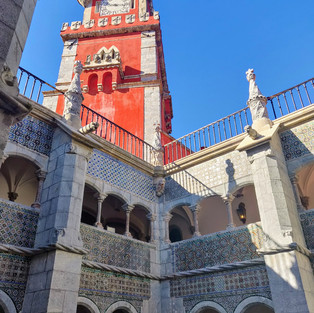


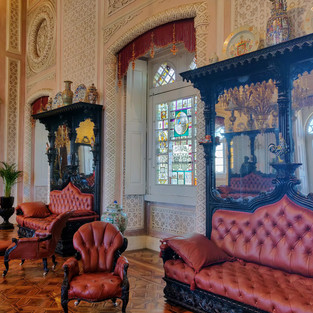
The palace was added on to in many stages over the year, with the oldest part being the red portion of the castle. There are so many intricate details in the palace including detailed woodwork, elaborate tilework, and ornate furnishings.


After touring around the National Park, we caught another tuk-tuk down to the historic center of Sintra to walk around the narrow cobblestone streets. We wandered around a bit before finding a little wine and liquor store that offered shots of Ginja in a chocolate cup.

Ginja is a cherry liquor that is popular in Portugal. The proprietor of the shop was very friendly and offered us tastings of several other liqueurs and port. They also had a little cafe so we decided to get some tapas and wine for an afternoon snack. We then walked around the village a bit more, meandering our way back toward the train station and then catching the train back to Lisbon.


Once we were back in Lisbon, we freshened up at the hotel before heading out to ride the Santa Justa Lift. It is a famous elevator that was designed by Raul Mesier de Ponsard, a student of Gustav Eiffel (yes, THAT Eiffel.)

Unfortunately the hours we found on Google seemed to be wrong and it was already shut down for the night. So we decided to head to the neighborhood of Bairro Alto for some food and drinks. We ended up at a little wine bar called Grapes and Bites. They offered a tasting menu so we munched on more tapas, and had the best olives we've ever had, although neither of us are huge olive fans to begin with.

After dinner we walked around a bit more and passed through a beautiful plaza called Praça Luís de Camões before calling it a night.

The next day we decided to head to Belém, a suburb to the West of the historic center of Lisbon. Our first stop there was Pastéis De Belém, famous for pastéis de nata, the famous Portuguese egg tarts. We tried several through our travels in Macau and Portugal, and these were definitely our favorites. They were served warm with cinnamon and sugar and went great with our piping hot espresso.

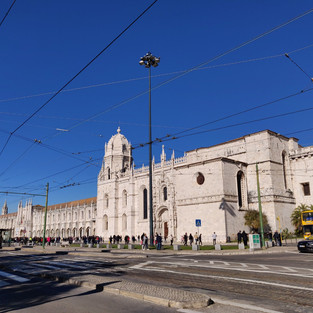
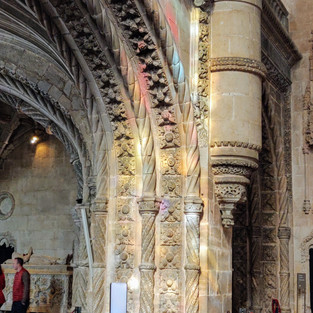
After breakfast, we stopped by the Jeronimos Monastery, which was quite large and very ornate. There are guided tours of the full monastery, but you can access the sanctuary for free and see the tomb of Vasco de Gama there.





Our next stop was the Padrão dos Descobrimentos or explorers monument. This monument celebrates the Portuguese "Age of Discovery" during the 15th and 16th centuries. It includes likenesses of Vasco de Gama, Ferdinand Magellan, and many others.

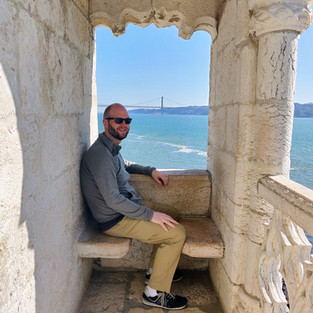
Our last stop in Belém was Belém Tower, a fortified tower built in the early 16th century to be part of a defense system at the mouth of the Tagus river and a ceremonial gateway to Lisbon. The tower consisted of four stories with a winding stone staircase from floor to floor. It had great views of the river and beyond from the outdoor terrace. Each room served a purpose from prison cells in the basement to a chapel and quarters on other floors.




Then we headed to Time Out Market for lunch. We had some delicious Portuguese food. Time Out Market is basically an indoor food court of local restaurants, bars, bakeries and shops. We got food from a couple of different vendors, but tried to stay with traditional options including caldo verde, a crispy pork sandwich, and of course, Portuguese wine.

Will full stomachs, we decided to explore Lisbon a little more. We knew we wanted to get to some higher ground to check out some of the views of all the red rooftops, and opted to head to Castelo de S. Jorge. On the way, we passed by Praça do Comercio, Lisbon's iconic yellow building, but we didn't get to spend any time there.

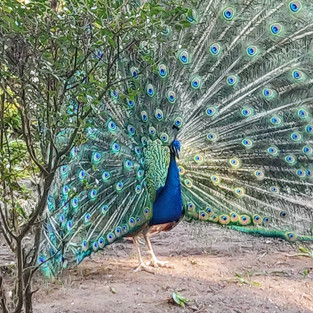
Once we made it up the hill to Castelo de S. Jorge, the views did not disappoint. Plus we got to see more castle ruins and the place was teeming with peacocks, which was an amazing surprise. After spending some time exploring the castle and taking in the breathtaking views, we decided to take the streetcar back down.





We took the famous tram #28 to Praça Dom Pedro IV because there was a famous ginja shop that we wanted to visit there.

The shop is called A Ginjinha, and unlike the tasting we had done the day before, this ginja was home-made and tasted much fresher. You can ask for it with or without a cherry. Both were delicious though.

Then it was time to head to Belcanto for our dinner reservation that we had made a few weeks in advance. Belcanto is a two Michelin star restaurant by Chef José Avillez with only a handful of tables. We had seen the restaurant featured on a TV docuseries and it had peaked our interest. The restaurant puts a modern gastronomic twist on traditional Portuguese dishes. We chose to order the full "Classics Menu" which included six courses with wine pairings, and some surprises along the way. The meal started with an martini-like apértif consisting of elderflower liqueur with an El Bulli olive in place of a real olive. Foodies may be familiar with the El Bulli olive, which was invented by a famous french chef. The olive is an example of molecular gastronomy and is actually a sphere of juice suspended in a gelatin shell. It explodes in your mouth with olive flavor when you bite it.

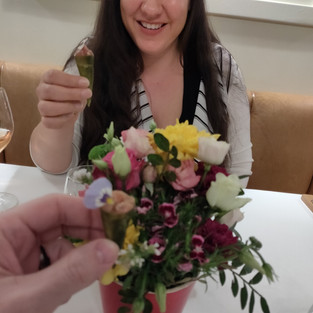

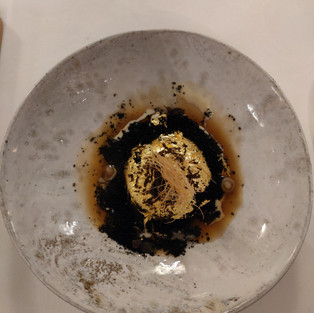


The courses ranged from Chef Avillez's famous "garden of the goose that laid the golden egg" to his Mandarin dessert and included surprises like edible "rocks", potato chips in an edible "plastic bag", and tuna tartar hidden in a flower bouquet. See the pictures below for more interesting courses that we tried. The dinner was equal parts delicious and entertaining and was the best overall service that we had ever received. We enjoyed one of the wines so much that six bottles are currently being shipped to us. For the wine fans, it's an unfiltered Alvarinho from the Vinho Verde region of Portugal and is from a winery called Soalheiro. This restaurant experience was the perfect way to wrap up our time in Lisbon before heading on to explore more of Portugal.



Comments